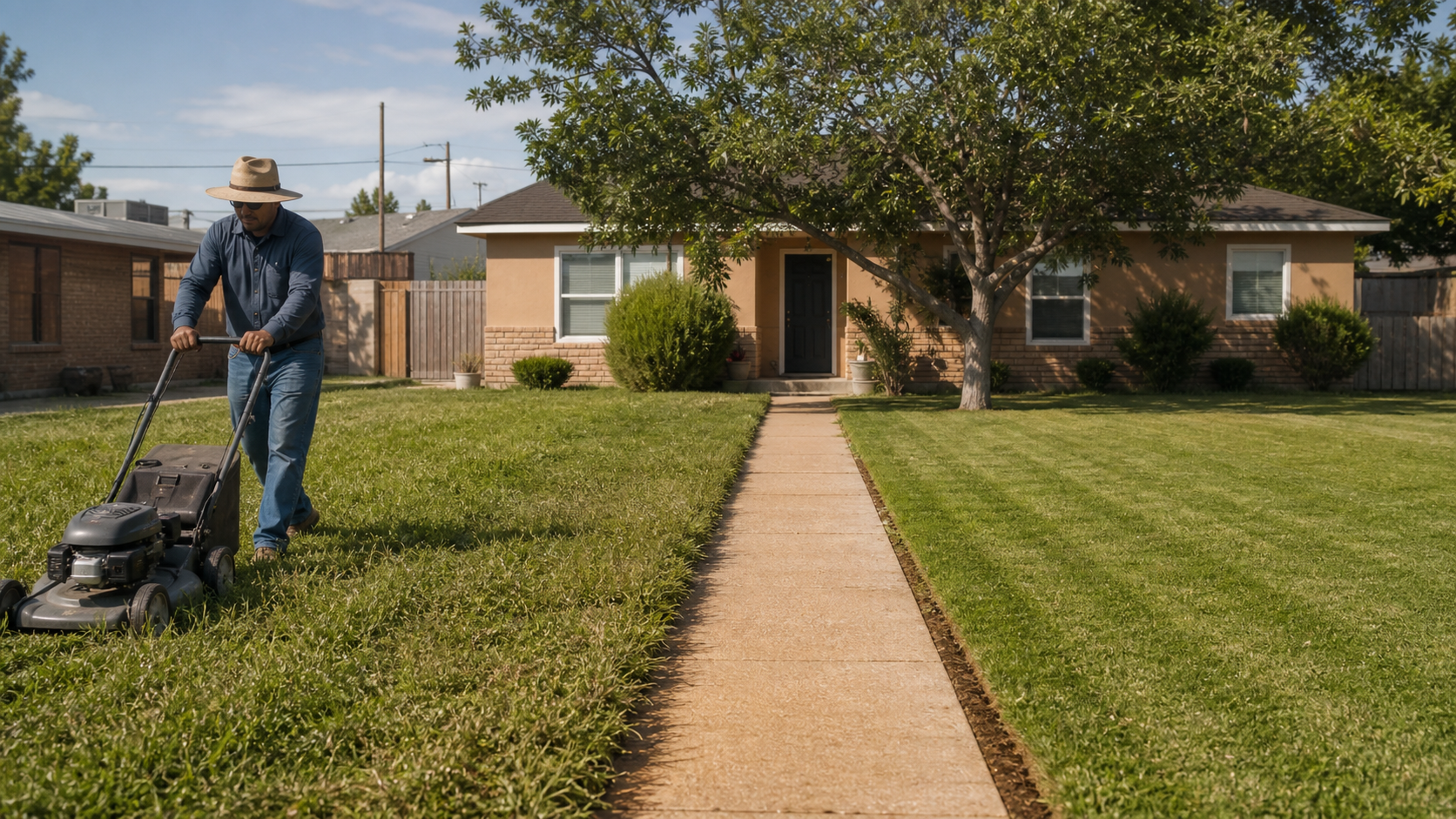
A one-time visit and a recurring maintenance plan solve different problems. One brings a property back to a manageable baseline; the other protects that baseline as the lawn keeps growing. The right starting point depends on current condition and what you want the yard to look like a month from now.
01
When one-time service makes sense
A single visit can fit a move-in or move-out, pre-event cleanup, seasonal leaf removal, storm debris, an overdue cut, or a property that only occasionally needs help. The scope should name the work included—mowing, edging, trimming, blowing, shrub work, or debris removal—because “cleanup” can mean very different things.
Overgrown properties may need a dedicated reset before normal mowing is practical. Tall or dense growth takes longer, can hide debris, and may not look like a routinely maintained lawn after one cut.
02
What recurring care changes
Recurring maintenance creates a predictable rhythm for mowing and detail work during active growth. Regular visits help keep grass within a manageable cutting range, reduce heavy clippings, and keep sidewalks and borders from disappearing under growth.
Frequency is not one fixed number for every property. Grass type, season, irrigation, shade, rainfall, and the height you want to maintain all affect the interval. A workable plan can change as growth slows or accelerates.
03
Think beyond the first visit
If your main goal is to make an overgrown yard usable this week, start with a reset. If your goal is to stop the yard from repeatedly becoming overgrown, discuss the reset and the follow-up schedule together. The lowest-effort plan over a season is often different from the lowest-cost single visit.
For rentals and commercial sites, consistency can also simplify inspections, tenant transitions, curb appeal, and access coordination.
04
Questions to ask before choosing
Ask what is included in each visit, how weather delays are handled, whether frequency changes seasonally, and how additional cleanup is approved. Confirm price, scope, and scheduling before treating any estimate as a booked service.
Quick checklist
What to review next
- Current height and overall condition
- One event or an ongoing result
- Expected growing-season frequency
- Edging, trimming, and blowing scope
- Seasonal schedule changes
- Weather and access plan
Local note: Property conditions and local requirements vary. Confirm current watering rules, product labels, service scope, pricing, and scheduling for your address before acting.