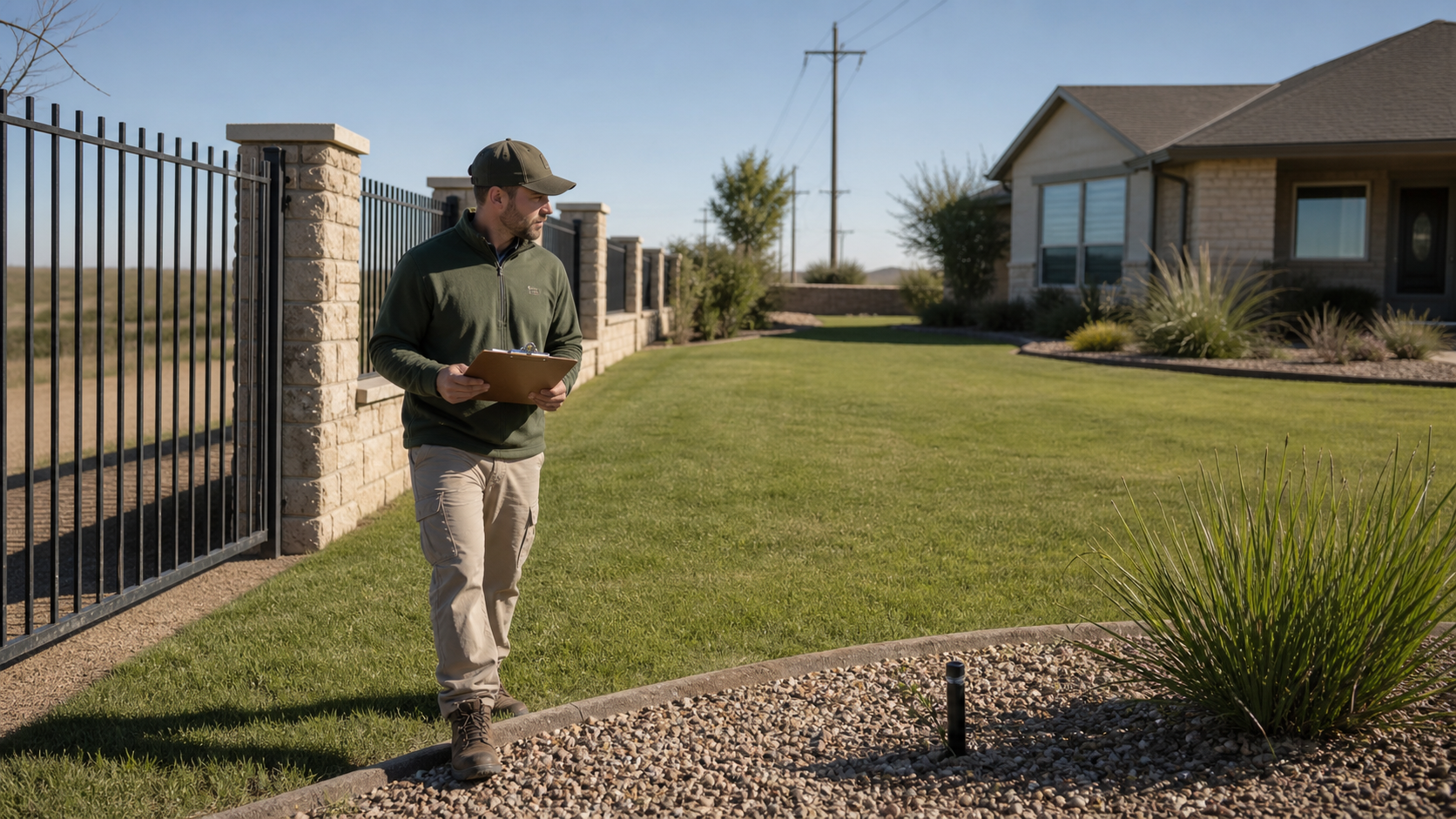
Two lawns with the same square footage can require very different work. Access, layout, obstacles, turf condition, and the finish expected all affect the time and equipment needed. Looking at the site as a whole leads to a more accurate conversation than size alone.
01
Access comes first
A mower cannot reach a back yard through a gate that is too narrow, and a locked alley gate can stop a scheduled visit. Note the narrowest access point, steps, steep ramps, gravel paths, and parking limitations. If pets use the yard, decide how they will be secured before arrival.
Commercial sites may add loading zones, customer traffic, tenant hours, or security procedures. These details belong in the plan, not in a last-minute message.
02
Edges and obstacles add detail work
Fence lines, tree rings, beds, play equipment, utility boxes, drainage channels, and long stretches of sidewalk create trimming and edging work. Irrigation heads, low landscape lights, exposed roots, and hidden debris need extra care. Mark anything that could be damaged or become a safety concern.
A mostly open rectangle may be faster to maintain than a smaller lawn broken into several narrow zones. Photos from the corners of the property make that difference visible.
03
Condition affects the first service
Dense growth, fallen limbs, litter, animal waste, or wet low spots can change what is practical on the first visit. An overgrown lawn may require multiple passes and extra clipping management. A thin or stressed lawn may need a conservative cut rather than an aggressive “make it short” approach.
Tell the provider about recent irrigation problems, construction, chemical applications, or newly installed sod. These factors can influence timing and equipment choices.
04
Define the finish
Some properties need a straightforward mow-and-blow. Others need crisp bed edges, detail trimming, debris haul-off, or coordinated shrub and hedge care. List the areas and tasks that matter instead of assuming they are automatically included.
Quick checklist
What to review next
- Gate width and locked access
- Slopes, steps, and narrow areas
- Beds, fences, and sidewalk length
- Irrigation heads and hidden obstacles
- Debris or overgrowth
- Finish and cleanup expectations
Local note: Property conditions and local requirements vary. Confirm current watering rules, product labels, service scope, pricing, and scheduling for your address before acting.