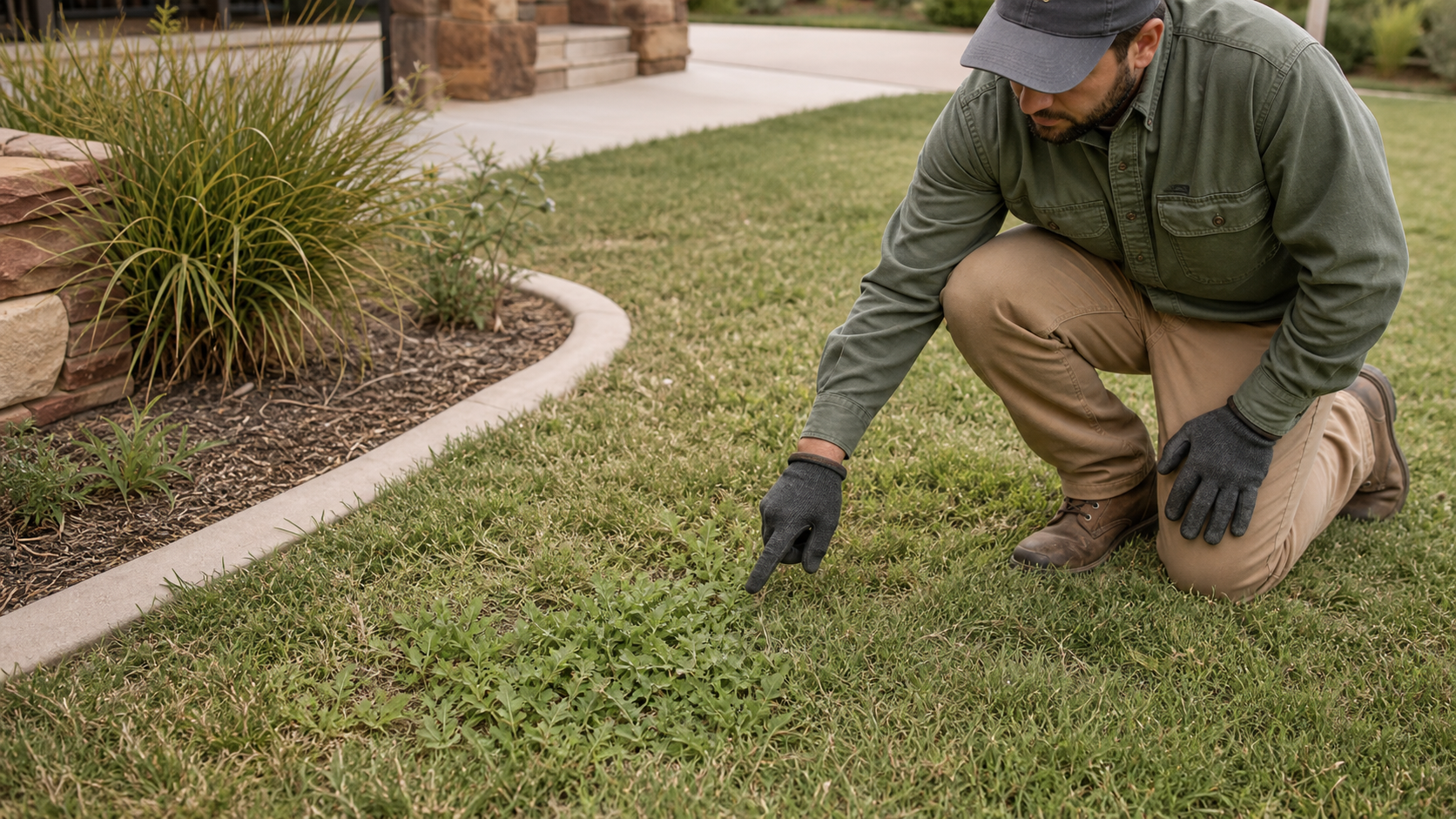
A weed is more than something growing in the wrong place. It can point to thin turf, bare soil, excess moisture, compaction, or a mowing habit that favors the invader. Identifying the plant and the site condition comes before choosing a treatment.
01
Start with an accurate ID
Broadleaf weeds, grassy weeds, and sedges respond to different control methods. Even plants that look alike may have different life cycles. Photograph the whole plant, leaf arrangement, stem, seedhead or flower, and the area where it grows. Your county Extension office or another qualified local resource can help with uncertain identification.
Do not apply a product based only on a quick image search. A wrong identification can waste time and injure the turf you want to keep.
02
Notice the conditions around it
Weeds often occupy openings. Bare areas near sidewalks may reflect heat and compaction; patches in low ground may point to drainage; shaded thin turf may not be able to compete; and scalped grass leaves more light for weed seedlings. Fixing those conditions can be as important as removing the current plants.
Map where weeds repeat. A pattern along every sprinkler head tells a different story from a few plants arriving in disturbed soil.
03
Prevention begins with healthy coverage
Maintain an appropriate mowing height, water deliberately, avoid creating bare soil, and address compaction or irrigation issues. Dense, healthy turf reduces—but does not eliminate—space for weeds. Pulling isolated plants before they produce seed can also be useful when roots can be removed without spreading them.
04
Treat carefully and by the label
If using an herbicide, choose a product labeled for the identified weed and your turf species, and follow every direction for rate, timing, temperature, protective equipment, pets, and re-entry. More product is not better. Wind and heat can make an otherwise routine application unsuitable.
For help, discuss the site and target weed with a qualified lawn treatment provider.
Quick checklist
What to review next
- Clear photos for identification
- Broadleaf, grassy weed, or sedge
- Sun, moisture, and soil conditions
- Bare or compacted areas
- Turf species and current stress
- Full product-label directions
Local note: Property conditions and local requirements vary. Confirm current watering rules, product labels, service scope, pricing, and scheduling for your address before acting.