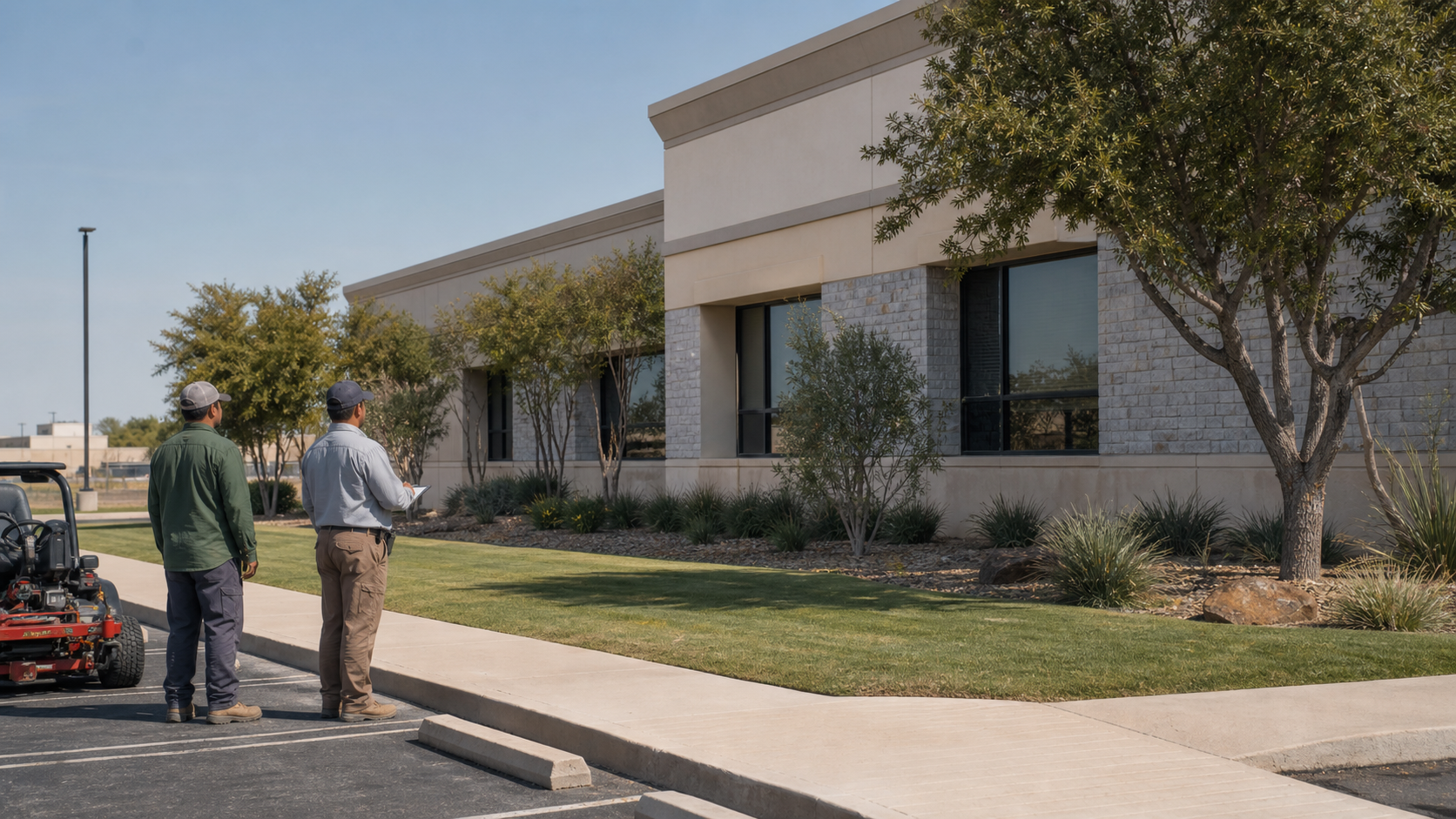
Commercial grounds care works best when the property and provider share one written definition of “maintained.” A clear scope connects appearance with access, safety, tenant activity, irrigation, weather, and communication—so routine visits do not depend on guesswork.
01
Inventory every maintained area
List lawn panels, medians, frontage, courtyards, retention areas, fence lines, beds, sidewalks, parking edges, and outlying strips. Mark who maintains adjacent right-of-way areas and which zones are excluded. A site map with photos is often the simplest reference.
Record gate codes, controller locations, loading schedules, security procedures, and places where equipment cannot operate safely.
02
Define the finish and frequency
Specify mowing, edging, string trimming, blowing, clipping management, litter pickup, shrub care, and seasonal cleanup separately. Set expectations for turf height, hard-surface cleanup, and how obstacles are handled. Frequency should respond to growth while still meeting the appearance standard.
For customer-facing sites, plan work around peak traffic, outdoor seating, deliveries, and noise-sensitive hours.
03
Create an exception process
Weather, irrigation leaks, parked vehicles, construction, locked access, and special events can interrupt routine work. Decide who receives updates, who can approve extra work, and how skipped areas are documented. Photos can help both sides close the loop.
Include a process for hazards such as broken limbs, exposed irrigation components, washouts, or debris that should be addressed before mowing.
04
Review the plan seasonally
A commercial plan should change as turf growth, leaf drop, irrigation demand, and site use change. Schedule periodic walkthroughs and review recurring problem areas rather than letting small issues become permanent exceptions.
A qualified commercial lawn care provider can use this information to confirm scope, schedule, and availability.
Quick checklist
What to review next
- Complete site map and exclusions
- Access and operating hours
- Mowing and detail-work standards
- Traffic and safety constraints
- Extra-work approval contact
- Seasonal review schedule
Local note: Property conditions and local requirements vary. Confirm current watering rules, product labels, service scope, pricing, and scheduling for your address before acting.