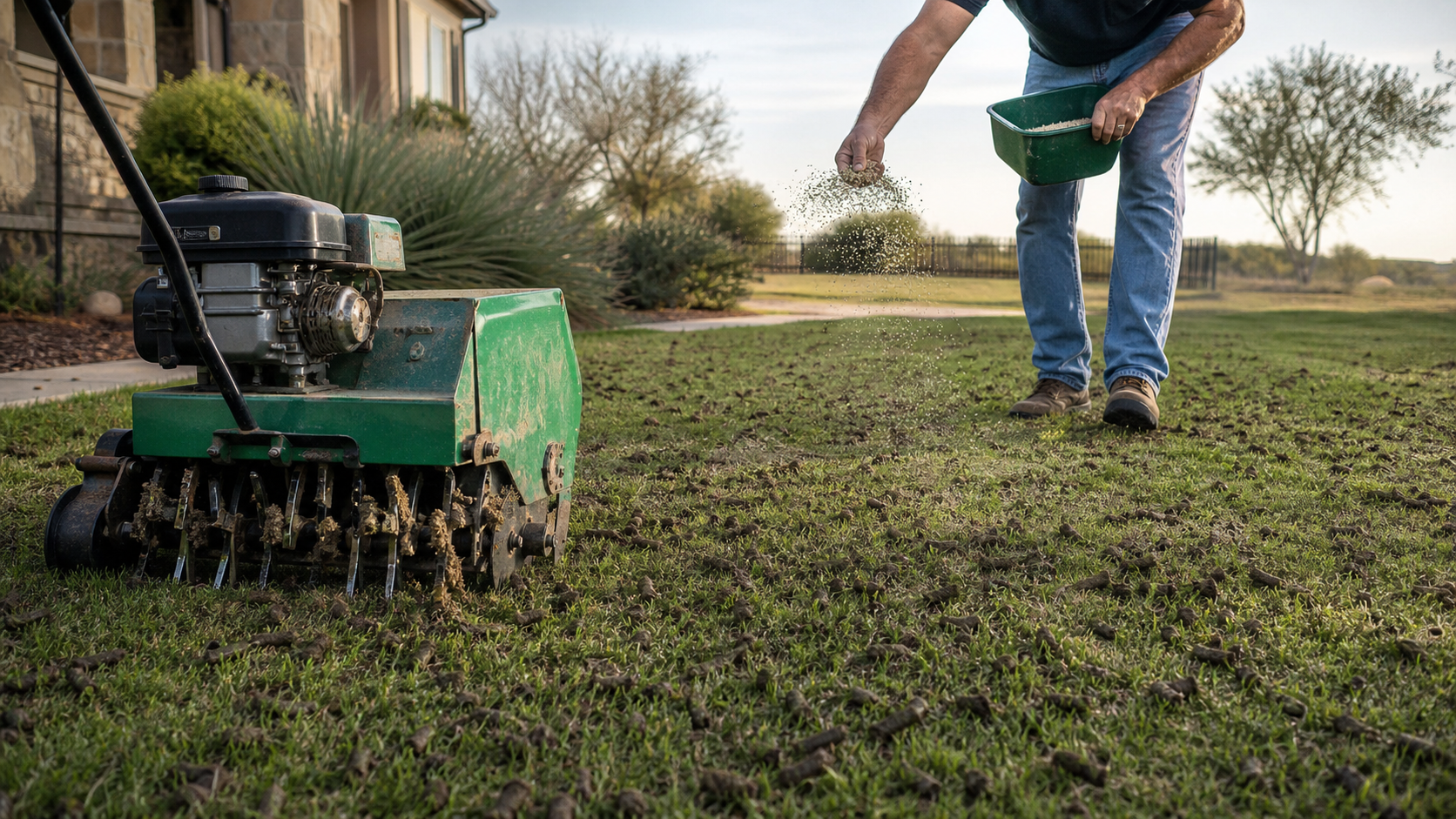
Aeration and overseeding are often sold together, but they do different jobs. Core aeration addresses soil and thatch conditions by opening the surface. Overseeding introduces seed to improve density or seasonal color. Neither is an instant repair for every thin lawn.
01
What core aeration does
A core aerator removes small plugs of soil and turf, creating channels that can improve air and water movement into compacted ground. It is most relevant where foot traffic, equipment, construction, or naturally dense soil limits infiltration and root growth.
The plugs left on the surface are normal and break down over time. Spike tools only push holes into the soil and are not the same as removing cores.
02
What overseeding does
Overseeding distributes seed into an existing lawn. It may fill thin cool-season turf or add temporary cool-season color over a dormant warm-season lawn. Seed choice and timing are critical. Some warm-season lawns are usually repaired through their spreading growth or vegetative material rather than a generic seed mix.
Before seeding, identify the existing turf and decide whether the goal is permanent repair, seasonal color, or a full conversion.
03
Timing and preparation decide the result
Aerate when the target grass can recover actively, not simply when the equipment is available. Locate shallow irrigation, cable, invisible-fence wire, and other buried systems before work. Control severe weeds and correct major drainage or irrigation problems first.
Good seed-to-soil contact matters. So does a seedbed that can be kept consistently moist during germination without runoff.
04
Plan the aftercare before the work
Fresh seed may require several light watering cycles at first, then a gradual transition to deeper, less frequent watering as seedlings establish. Traffic and mowing must be managed carefully. Product timing matters too; some pre-emergent herbicides can prevent desired seed from germinating.
Discuss the whole sequence with an aeration and overseeding service before scheduling.
Quick checklist
What to review next
- Existing turf identification
- Reason for thin growth
- Compaction and drainage
- Buried irrigation and wires
- Seed choice and timing
- Watering and traffic aftercare
Local note: Property conditions and local requirements vary. Confirm current watering rules, product labels, service scope, pricing, and scheduling for your address before acting.